Showing posts with label BestImages. Show all posts

Tuesday, December 11, 2012

Congratulations to Winners of the 2012 Photowalk

The winners of the 2012 STFC Photowalk Competition were announced today.

LOFAR-UK would like to pass our congratulations to the national winner, Mrs Lisa Ward who won a trip to CERN with the below photo she took of the 25m dish at Chilbolton.

2012 STFC Photowalk National Winner, Lisa Ward (Credit: Lisa Ward/STFC)
We also extend our congratulation to Dr. Roger Dingley, who was named the Chilbolton winner for the below photo he took of a LOFAR-UK antenna at Chilbolton.

2012 STFC Photowalk Chilbolton Winner, Roger Dingley (Credit: Roger Dingley/STFC)

And finally congratulations too to all the other regional winners, and indeed all the entrants for their fantastic photos of STFC facilities across the nation.

You can see all the finalists here, and some photos of the photographers at work on the Chilbolton LOFAR-UK site here.

Thursday, November 22, 2012

STFC Photowalk Competition Finalists


The 10 finalists of the 2012 STFC Photowalk Competition have now been decided, and include one image of a LOFAR LBA at the Chilbtolton Observatory.

The final images include 4 regional winners, the winner of an online vote, plus the next top 5 from the online vote.


The regional, online and overall national winners will be announced on Friday 7th December following the final judging panel.

This is the LOFAR Image which has been shortlisted. "Part of the LOFAR site - Searching the Universe", by Roger Dingley (for full credits see here.)

Monday, October 29, 2012

Press Release: Supermassive Black Hole Inflates Giant Bubble

A press release out this morning from ASTRON on the results from LOFAR imaging of M87

Supermassive Black Hole Inflates Giant Bubble


The image from the release above- a lovely composite of the LOFAR and SDSS optical data.

Tuesday, June 12, 2012

New Map of the International LOFAR Telescope

Here is a great new map of the International LOFAR Telescope which has been made by ASTRON. It's available with or without the international stations labelled. (Click on the caption for the highest resolution versions hosted at ASTRON's page of LOFAR pictures).

The International LOFAR Telescope. Credit: ASTRON

The International LOFAR Telescope: Credit ASTRON

Wednesday, May 23, 2012

Colliding galaxy cluster unravelled

The below is a press release put out today in support of the paper: First LOFAR observations at very low frequencies of cluster-scale non-thermal emission: the case of Abell 2256, van Weeren et al. A&A in press (arXiV:1205.4703)

Galaxy cluster Abell 2256 imaged at 60 MHz with LOFAR


An international team of astronomers has used the International LOFAR Telescope from ASTRON, the Netherlands Institute for Radio Astronomy, to study the formation of the galaxy cluster Abell 2256. Abell 2256 is a cluster containing hundreds of galaxies at a distance of 800 million lightyears. ‘The structure we see in the radio images made with LOFAR provides us with information about the origin of this cluster, explains lead author dr. Reinout van Weeren (Leiden University and ASTRON). The study will be published in the scientific journal Astronomy & Astrophysics. The research involved a large team of scientists from 26 different universities and research institutes.
LOFAR has made the first images of Abell 2256 in the frequency range of 20 to 60 MHz. What came as a surprise to scientists was that the cluster of galaxies was brighter and more complex than expected. Dr. van Weeren: ‘We think that galaxy clusters form by mergers and collisions of smaller clusters’. Abell 2256 is a prime example of a cluster that is currently undergoing a collision. The radio emission is produced by tiny elementary particles that move nearly at the speed of light. With LOFAR it is possible to study how these particles get accelerated to such speeds. ‘In particular, we will learn how this acceleration takes place in regions measuring more than 10 million light years across’, says Dr. Gianfranco Brunetti from IRA-INAF in Bologna, Italy, who together with Prof. Marcus Brüggen from the Jacobs University in Bremen, coordinates the LOFAR work on galaxy clusters.
LOFAR was built by a large international consortium led by the Netherlands and which includes Germany, France, the United Kingdom and Sweden. One of the main goals of LOFAR is to survey the entire northern sky at low radio frequencies, with a sensitivity and resolution about 100 times better than what has been previously done. Scientists believe that this survey will discover more than 100 million objects in the distant Universe. ‘Soon we will start our systematic surveys of the sky that will lead to great discoveries’, says Prof. Huub Röttgering from Leiden University and Principal Investigator of the 'LOFAR Survey Key Project'.

For more information, please contact:
Dr. Reinout van Weeren, astronomer, Leiden University and ASTRON. Tel.: +31 71 527 5864. E-mail: rvweeren@strw.leidenuniv.nl
Prof. Huub Röttgering, astronomer, Leiden University. Tel.: +31 6 41522603. E-mail: rottgering@strw.leidenuniv.nl
Femke Boekhorst, PR & Communication, ASTRON. Tel.: +31 521 595 204. E-mail: boekhorst@astron.nl

Friday, May 11, 2012

Current Map of International LOFAR Telescope

Using the LOFAR Status Map as a basis, I just made this up-to-date map of the locations of LOFAR stations across Europe.

LOFAR stations across Europe. May 2012. Credit: Google Maps, ASTRON. 


Friday, January 6, 2012

Lunar Eclipse Over LOFAR Station near Exloo

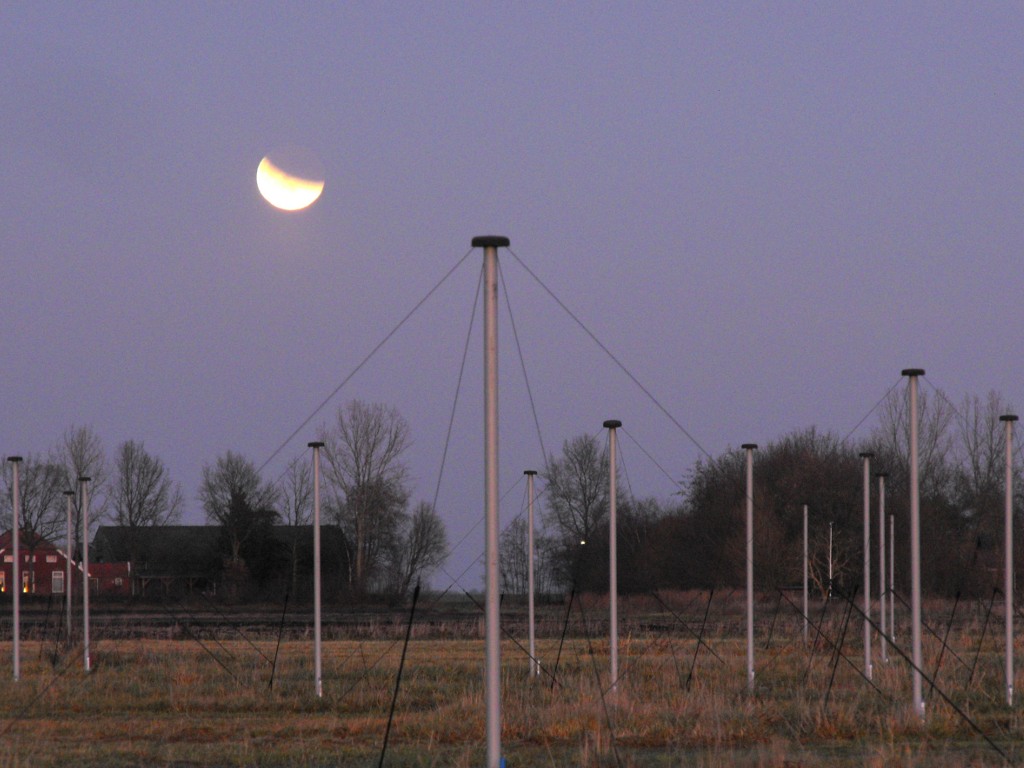
Today's ASTRON image of the day is this lovely shot of last month's lunar eclipse taken over a LOFAR station near Exloo by radio astronomer Megan Argo.

Lunar eclipse over LOFAR. Credit: Megan Argo.

Monday, November 14, 2011

Spectacular view of the LOFAR Core

Check out this ASTRON image of the day from last month with spectacular aerial images of the LOFAR core region.

ASTRON image of the day from 12th Oct 2010. Please visit the link for more details. 

Friday, November 11, 2011

Everyone's Favourite Image of Chilbolton - reflected in the sunglasses

I constantly get asked for this image, so here's a post just about it. Chilbolton reflected in the sunglasses of ICG member Dr. Edd Edmondson as photographed by former ICG member Dr. Chiara Tonini.


Album of all of Chiara's pictures from the LBA installaton.

Wednesday, April 13, 2011

Aerial photographs of LOFAR-UK Chilbolton

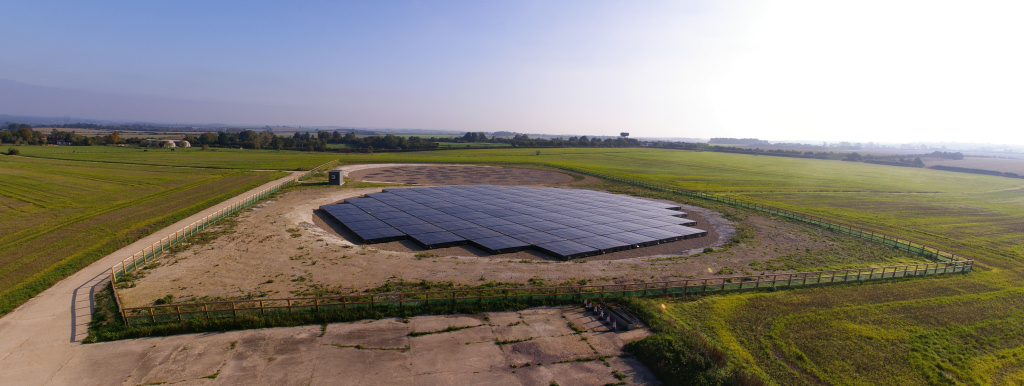
Some dramatic photographs have just been posted on the Press and Media Image Library of the UK's Science and Technology Facilities Council (STFC). These show the LOFAR station at Chilbolton, Hampshire, UK, as seen from the air. Although there are plenty of photographs of various LOFAR stations from the ground, and plenty of diagrams showing the layout of the sites, this is a good opportunity to get a bird's-eye view of what a station looks like.

The credit for all these images goes to Guy Gratton, who took the photographs during the afternoon of Friday 8th April 2011, and who graciously gave permission for their use by the STFC/LOFAR community. The images were taken from an aeroplane flying at an altitude of approximately 300 metres (1000 ft) over the site, through an open door on the aircraft to avoid any window reflections.

Banking away from the LOFAR field, you can see the Chilbolton 25m dish
(Photo: 
Guy Gratton (c) 2011, hosted by STFC.)

Looking specifically at the LOFAR-UK station (LOFAR-ID = UK608). The HBA is on the left and the LBA is on the right. If you look carefully, you can just make out the RF-container in the space between where the two fields meet and the access road. (Photo: Guy Gratton (c) 2011, hosted by STFC.)


When you start to move further back, more the surrounding facilities become apparent. Apart from the main 25m dish, there is a small 4.5m dish on the right-hand side, just below the LOFAR compound. (Don't forget you can click on images for a slightly enlarged view.)

Looking at the site from even further away, the scale of the Chilbolton Observatory becomes clear. (Photo: Guy Gratton (c) 2011, hosted by STFC.)


The LOFAR-UK site, as seen from the air. 
(Photo: Guy Gratton (c) 2011, hosted by STFC.)
The above photograph is a great way to appreciate the scale of an international LOFAR station. The dish near the top of the photograph is the 25m parabola of the Chilbolton Observatory.

Check the STFC's Press and Media Image Library for all high-quality photographs of the LOFAR-UK station. You can also find full-resolution versions of some of the above photographs, suitable for use in printed media. Thanks goes to the Chilbolton Observatory and UK608 project teams, the RAL-Space outreach team and, of course, Guy Gratton for the great photographs.

Wednesday, October 13, 2010

Overview Images

Yesterday at Chilbolton, we made use of the trailer-mounted cherry picker. The first image was made from a height of approx. 10 metres above the hard compound at the end of the HBA array. It gives a great view of the HBA, but the LBA is still visible in the distance.

The second image is from the opposite right side, looking back over the LBA, but also with an excellent view of the HBA and 25m dish in the background. It was made from a height of approx. 16 metres.

The final image shows the photographer in action; not a job for anyone with a fear of heights.

Tuesday, September 21, 2010

Official LOFAR-UK Opening

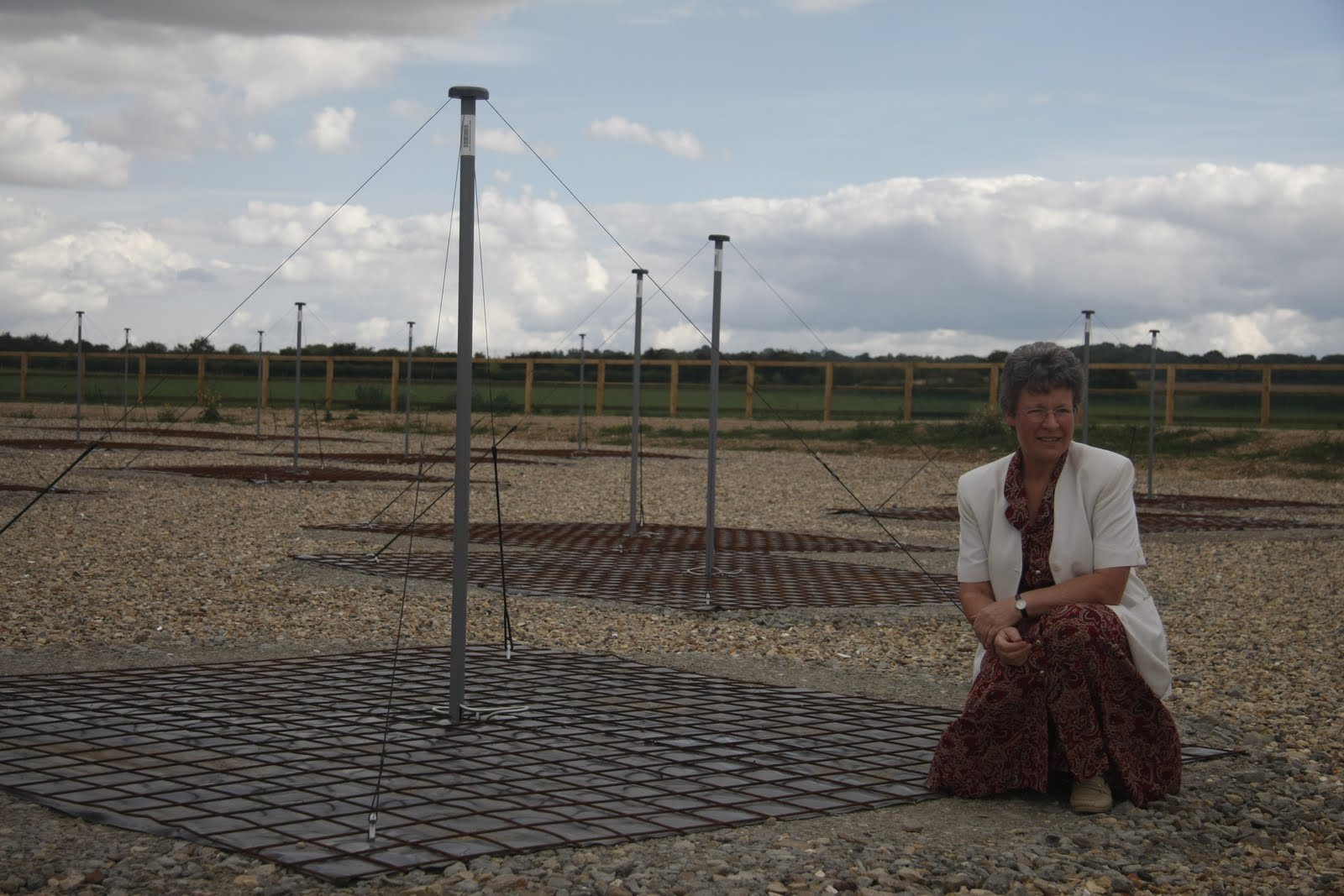
Yesterday was a big day for LOFAR-UK. The station at Chilbolton was officially handed over (as per an earlier blog report) and was also officially opened by Dame Jocelyn Bell Burnell in a ribbon cutting ceremony out in the field.


(Picture taken by James West, SEPnet)

This ribbon cutting was followed by real time observations of one of the brightest pulsars in the sky (thanks to Aris Karastergiou from Oxford Univ. who had worked very hard and set up some impressive computing to process the data to show us in real time). Jocelyn seemed very pleased to see the telescope worked, and was very excited particularly about it's potential to detect new transient radio emitters.


(Picture taken by James West, SEPnet)

After the Chilbolton event was a celebratory event held at the nearby Intech Science Centre. Rob Fender (LOFAR-UK PI, Southampton Uni), John Womersley (STFC), Mike Garrett (ASTRON) and Derek McKay-Bukoswki (Chilbolton Station Project Manager) all gave talks, and then Jenny Shipway (Intech Planetarium Manager) gave us a wonderful planetarium show specially adapted to include links to LOFAR science. I think I can speak for most astronomers in the room by saying that we don't get to see planetarium shows very often, and it was a wonderful reminder of the inspirational science behind why most of us got into this game in the first place.

Also we had cake.

(Picture taken by Bob Nichol, Portsmouth).

Well done to everyone involved.

Sign of the times

The finishing touch on the LOFAR field was putting up the sign. On it, apart from the station name (LOFAR-UK Chilbolton) and number (UK608), there are the logos/names of all the contributing organisations.

Monday, September 13, 2010

A new vista

This panorama of the LOFAR-Chilbolton field was taken on the morning on 28th August 2010. It shows both LOFAR fields; the solid-packed HBA on the left and the sparse LBA to the right. In the background is the 25m dish at the main Chilbolton Observatory compound. In the picture there are two containers. The blue one directly behind the HBA is the skip where surplus construction materials are stored. It will be removed from the site soon. The other, just beyond the right-hand edge of the HBA field is the RF-container. The main Chilbolton Observatory building is just to the left of the 25m dish.