Showing posts with label tkp. Show all posts

Tuesday, June 12, 2012

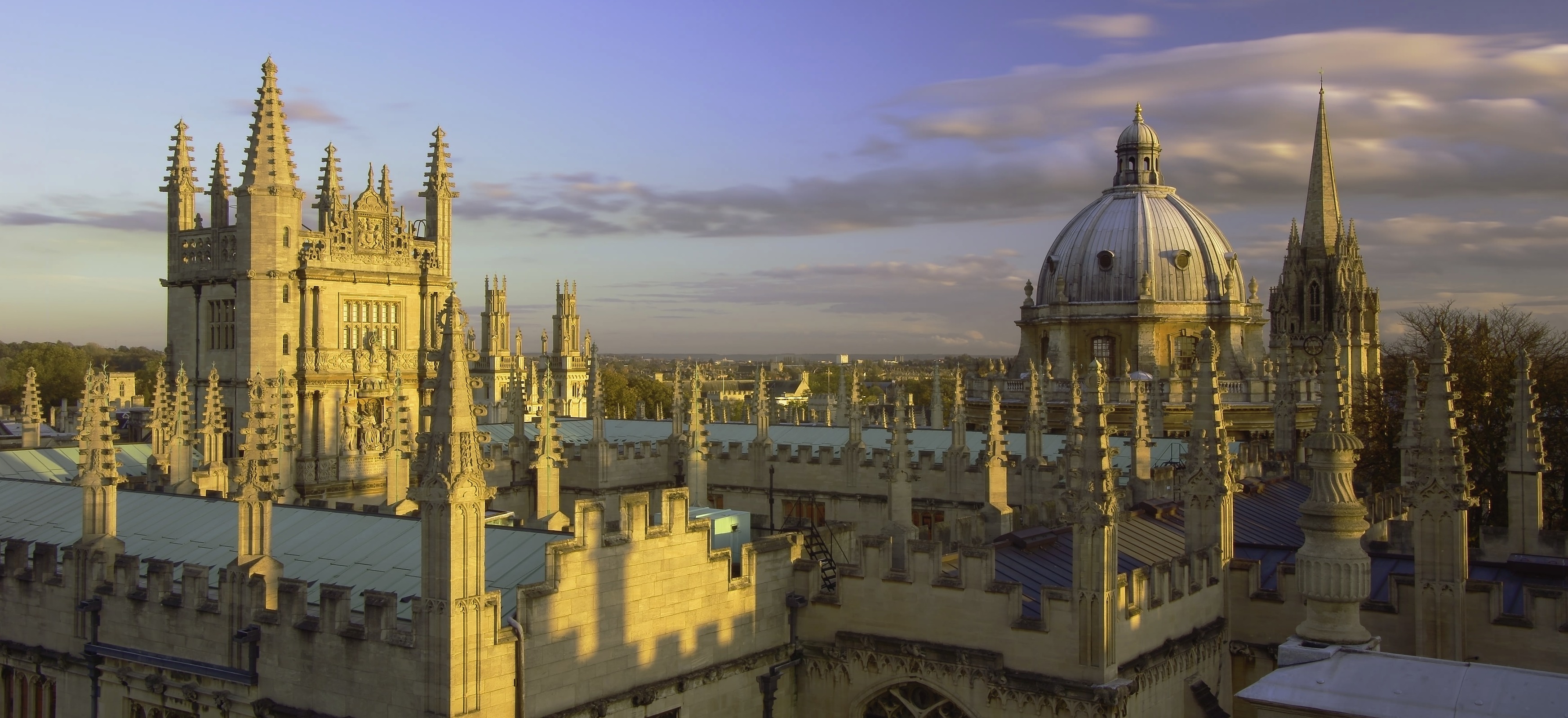
Radio Transients Meeting in Oxford this Week

A joint meeting of the ThunderKAT (the MeerKAT Transients Key Science Project), the LOFAR Transients Key Science Project, and TRAPUM (Transients and Pulsars with MeerKAT) is happening this week in Oxford, UK.


For more information see the meeting website.

Friday, August 5, 2011

LOFAR related postdocs at CEA Saclay (near Paris)

Another job advert for two postdoc positions at CEA Saclay near Paris working on detection of radio transients - including for the LOFAR Transient Key Project.

AAS Job Register posting (copied below).


Applications are invited for two postdoctoral positions in signal processing/data analysis for an initial period of 2 years, with the UnivEarthsS LabEx program.
The astrophysics division of CEA Saclay is offering two positions to work with Professor Stéphane Corbel on radio transients in close collaboration with Jean-Luc Starck. Over the next decade, a combination of increased sensitivity, larger field of view, and algorithmic developments will open up the time domain to a wide range of astronomical fields, from stellar flares and supernovae to neutron-star and black-hole births, quakes and instabilities. Radio astronomy is leading this effort and transient science is identified as a key goal for LOFAR (Europe), ASKAP (Autralia) and MeerKAT (South Africa), the precursor instruments of the major international SKA facility to be developed for 2020+.
The applicant will work in one of these related topics:
  -Transient search in one of the affiliated key projects: TKP (LOFAR), ThunderKAT (MeerKAT), VAST (ASKAP),
  - Optimization of current methods and development of near real-time detection pipelines,
  - Characterization of transients and identification at other wavelengths,
  - Image reconstruction from undersampled Fourier measurements.
Minimum qualifications include an undergraduate degree or higher in astronomy, physics, computer science, statistics or related field. The candidate must have a strong motivation in developing statistical methods and applying them in large international projects. CEA Saclay ( http://irfu.cea.fr/Sap/en/ ) is located 25km south of Paris, near Universities and other research centers. The astrophysics division gathers more than 150 faculty and staff members, studying a large range of astrophysical problems.
The positions are initially for two years and the starting dates should be between early Fall 2011 and early 2012. Ample funding for conferences, collaborations, personal equipment and publication is available. Applicants should submit by email resume, bibliography and a brief research plans to Stéphane Corbel (stephane.corbel@cea.fr) and Jean-Luc Starck (jstarck@cea.fr) and arrange for three reference letters to be sent as well before 31 August 2011.
 

LOFAR to be subject of an RAS Public Lecture

LOFAR is to be the subject of an upcoming Public Lectures hosted by the Royal Astronomical Society, on 10th January 2012.

The talk, LOFAR: A Radio Telescope the Size of Northern Europe will be given by LOFAR-UK and Transients Key Project member Dr. Edward Daws from the University of Sheffield.


RAS Pubic Lectures are 45-minute lunchtime talks for non-specialists. Members of the public can listen to leading scientists talk about their work.
Place: Lecture Theatre, Royal Astronomical Society, Burlington House, Piccadilly, London.
Time: 1pm, second Tuesday of the month.

'Friends of the RAS' are encouraged to reserve a seat, subject to availability, by email (to friends@ras.org.uk ) or letter up until 10am on the day of the lecture. Seats, in the reserved area of the lecture theatre, will be kept until 1255 (when they will be released). Simply turn up before 1255 – but please do sit in the reserved, central, rows!

Seats cannot be guaranteed for ‘Friends’ who do not reserve them. However, subject to availability, they will be admitted into the non-reserved seating area or the Council Room (where the lecture will be relayed on a plasma screen). To improve your chance of a seat in the lecture theatre you should arrive before 1245.

After 1245 ‘non-Friends’ will be admitted, subject to availability, to the  non-reserved seating area or the Council Room. Before 1245 ‘non-Friends’ will be held in a queue outside the building. Please note advance seat reservation is restricted to 'Friends'.

Summaries of (some) previous lectures can be read on the 'Friends of the RAS' web site

For further information call 020 7734 3307 / 4582

Wednesday, January 5, 2011

LOFAR Related PhDs at Southampton University

There are two PhD positions are available to work on LOFAR related science at the University of Southampton. Below is the advert from Southampton. 


Cosmological Radio Transients: Novel Techniques and Optical Counterparts


- Prof Rob Fender (http://www.astro.soton.ac.uk/~rpf)

Two PhD positions are available to work in the newly-formed '4 PI SKY' team at Southampton, led by Professor Fender and funded by a 3 million Euro EC grant. The goal of the team is to coordinate and advance global efforts for the discovery, identification and understanding of cosmological radio bursts. These bursts are associated with diverse extreme astrophysical phenomena such as merging neutron stars, accreting black holes and supernovae. With these programs we hope to perform a real-time census of particle acceleration in the local universe, understand the growth of black holes on cosmological timescales, probe the nature of the distant intergalactic medium for the first time, and - just maybe - detect electromagnetic counterparts to the first-detected gravitational wave sources.

Professor Fender is joint project leader of radio transients programs on both LOFAR (www.lofar.org) and MeerKAT (www.ska.ac.za), two revolutionary new radio telescopes. The PhD projects available are (i) to work, in partnership with the Oxford University Transient Universe Studies group (OTUS), to develop novel techniques for the detection of transient events in the vast streams of data that will be produced by telescopes such as LOFAR and MeerKAT, and (ii) to work on the follow-up and classification programs for the optical counterparts of detected radio transients - only with these data will we be able to understand the physics behind the bursts that we detect.

Both of these projects will involve close collaboration with, and visits to, other collaborating groups in places such as Amsterdam, Cape Town and Sydney. The projects are funded for 4 years each and are open to applicants from across the EC. 


For more details on the group, and how to apply for the studentships,
please go to:

http://www.astro.soton.ac.uk/postgrad.html

Tuesday, April 6, 2010

TKP Project Up and Running

The Transient Key Project (as described in our last blog entry) started test observations this week with LOFAR. An important milestone for the project.

Wednesday, March 31, 2010

The LOFAR Transients Key Project, by John Swinbank

This the first in (I hope) a series of guest posts by British (or British based) astronomers working on LOFAR. This one is by John Swinbank from the LOFAR Transients Key Project at he University of Amsterdam.

About John

Born and raised in Glasgow, John studied in Oxford, obtaining a DPhil in astrophysics a few years ago. Since 2006, he has been based in Amsterdam, working for the LOFAR Transients Key Science Project. Although he's not directly involved with the LOFAR-UK project, that makes him a British representative at the heart of some of the most active LOFAR development.

The Transients Key Science Project, by John Swinbank.

LOFAR as a whole is being designed and built by ASTRON, the Dutch institute for research in radio astronomy. Although it is designed to be an open facility-everybody will be able to request use of it, and the best science cases will be assigned the most time—the capabilities of the telescope have been driven by six so-called “key science projects”. Two of these (“Solar Physics & Space Weather ” and “Cosmic Magnetism”) are international projects, while four are based at Dutch universities: “Cosmic Rays” at Nijmegen, “The Epoch of Reionization” at Groningen, “Extragalactic Suverys” at Leiden, and “Transients” at Amsterdam.

The Transients Key Science Project (or TKP) has a very high level of British involvement; two of our three principal investigators (project leaders) are based in the UK: Rob Fender in Southampton, and Ben Stappers in Manchester (the third, Ralph Wijers, is here in Amsterdam).

LOFAR and transient science

Transient astronomy concentrates on objects which change on relatively short timescales: from seconds to days or even weeks. This is in contrast to most astronomical objects, which evolve slowly over the course of billions of years. These rapid events are generally due to extremely violent, high-energy phenomena, which emit produce powerful radio emission. LOFAR combines a high sensitivity with a wide field of view (as we’ll see below), making it a uniquely powerful instrument for searching the sky and detecting transients as they happen. And the sooner we know about a transient, the more potentially exciting science can be done with it: it’s much more useful to monitor the transient over its lifetime, than to simply catch it after most of the action is already done, and watch it fade away.


We already have a good idea about many of the types of transient LOFAR will see: pulsars, planets, jets from neutron stars or black holes (as illustrated in the above figure), and so on. However, one of the most exciting areas of the TKP’s work is the potential for serendipitous discoveries: we simply don’t know what we’ll find! No other telescope has had the capability to provide such a sensitive, high resolution survey of the low-frequency radio universe. History suggests that such leaps forward in telescope capabilities are often associated with unexpected new scientific discoveries. We are designing our strategy with the hope and expectation we’ll find something new, but we don’t yet know what it might be.

The Radio Sky Monitor

Various ways of using LOFAR to investigate the different types of scientific targets have been proposed by the TKP. However, the most ambitious is the Radio Sky Monitor (RSM), and it’s this which I spend most of my time working on. The idea is to scan the sky all the time, and detect new astronomical transients as they happen. By automatically spotting interesting events and responding immediately, we can capture the most interesting science possible.

LOFAR is composed of a series of stations, similar to the one LOFAR-UK is building at Chilbolton. The initial phase of the array consists of 36 in the Netherlands, plus a number across Europe. The Dutch stations are arranged to form a central core of 18 stations near Exloo, and the rest spread out over distances of around a hundred kilometres.

Each station, in turn, consists of two different designs of antenna: the low band (30–80 MHz) and the high band (120–240 MHz) (the hole in the middle exists so that we don’t observe FM radio by mistake!). The interesting thing about the antennae, though, is that they don’t have any moving parts. Unlike traditional radio telescopes, with their big dishes and complicated machinery, there’s nothing in LOFAR that needs to actually turn to point at something. Instead, images are made by combining the data from all the stations using a super- computer (an IBM BlueGene/P at the University of Groningen). To a good approximation, each of the antennae is sensitive to the whole sky: the only limits on the size of the images is the enormous amount of data which needs to be transported from each station (about a thousand times more than your average broadband internet can handle)and the speed of the supercomputer which has to process it.

What good are the international stations? Well, the larger the telescope is, the better the resolution. For observing really fine details stations spread across Europe are essential (it’s exactly this that makes projects like LOFAR:UK so important!).

For our purposes, though, we prefer to take a different approach. By using only the stations from the LOFAR core, data only need be transported over a few kilometres, rather than hundreds or even thousands. Further, there’s less data in total which arrives at Groningen for processing. Working in this mode, although the resolution of the instrument is less, it’s possible to see much more of the sky at any given time: about a quarter of the visible area over a day.


While working in RSM mode, LOFAR will continuously take “snapshot” images: one every second, as well as some with longer integration times for greater sensitivity. By comparing the images, we’ll be able to spot new transient events as they happen. This will all happen automatically, coordinated by a computer which has complete control over the whole telescope. Therefore, when a new event is spotted, it’s possible to immediately reconfigure the telescope to respond. Since there are no moving parts, and no human intervention is required, we could immediately (for example) switch to using the full array mode and zoom in at high resolution on the new detection. (Different modes of LOFAR are illustrated above.)

Of course, all the data we take will be saved: we expecting to be recording around 100 Terabytes of data per year. That’s equivalent to about 20,000 DVDs, and is far more data that we can deal with internally within the project. Therefore, we’re very committed to the idea of open access: we hope to make as much as possible of the data accessible to the wider astronomical community, so that others can spot anything we’ve missed!

Conclusion

LOFAR is a uniquely capable instrument for investigating astronomical transients, and we’re working hard to exploit that as effectively as possible. The Radio Sky Monitor is a completely new way of investigating the sky, and we can’t wait to see what we’ll find...

Thanks for the post John!